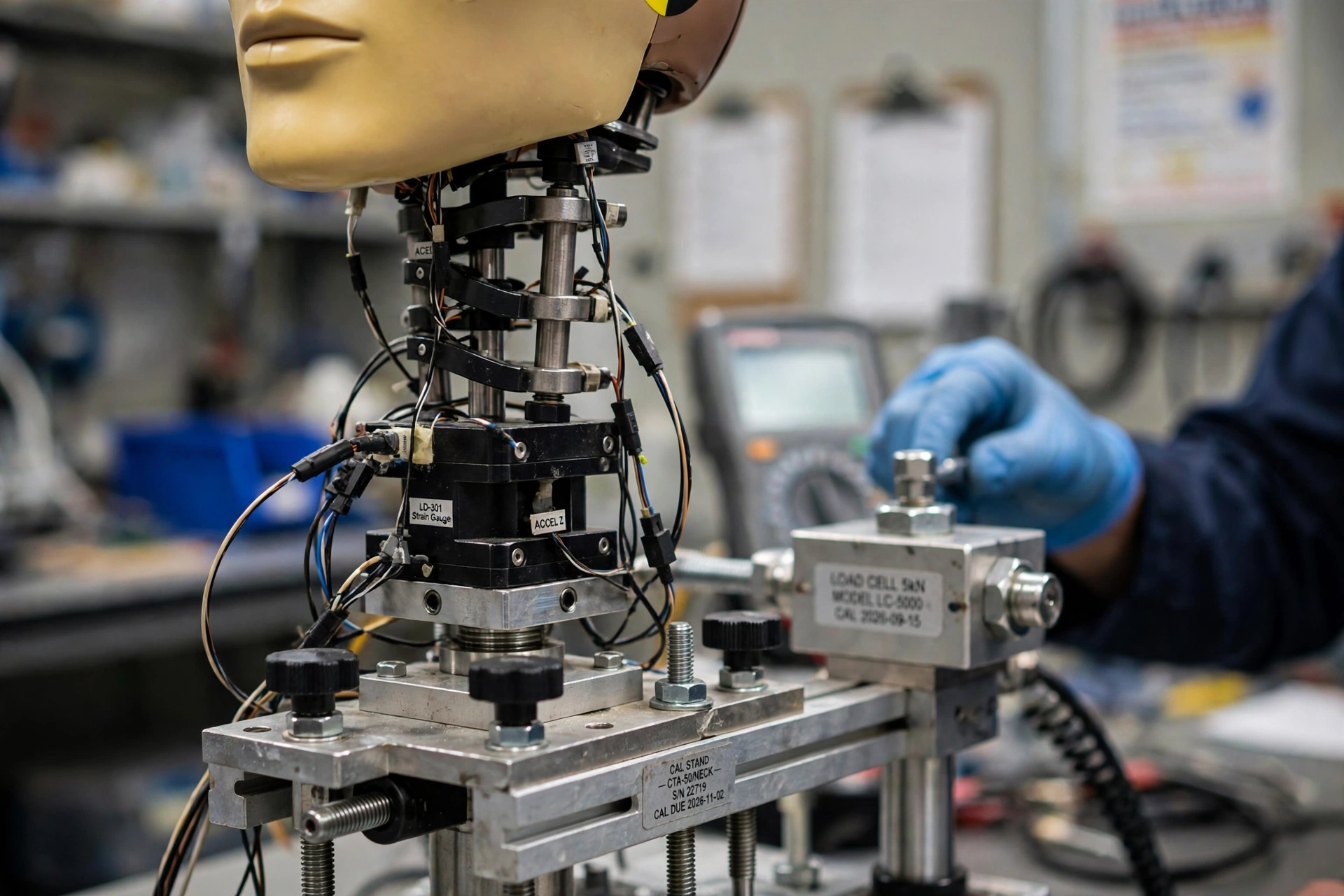
We rely on established physics and engineering and peer-reviewed authoritative literature — then test what we still need to know. BRi runs independent testing programs, calibrated instrumentation, and experiments designed around the questions that decide each case.
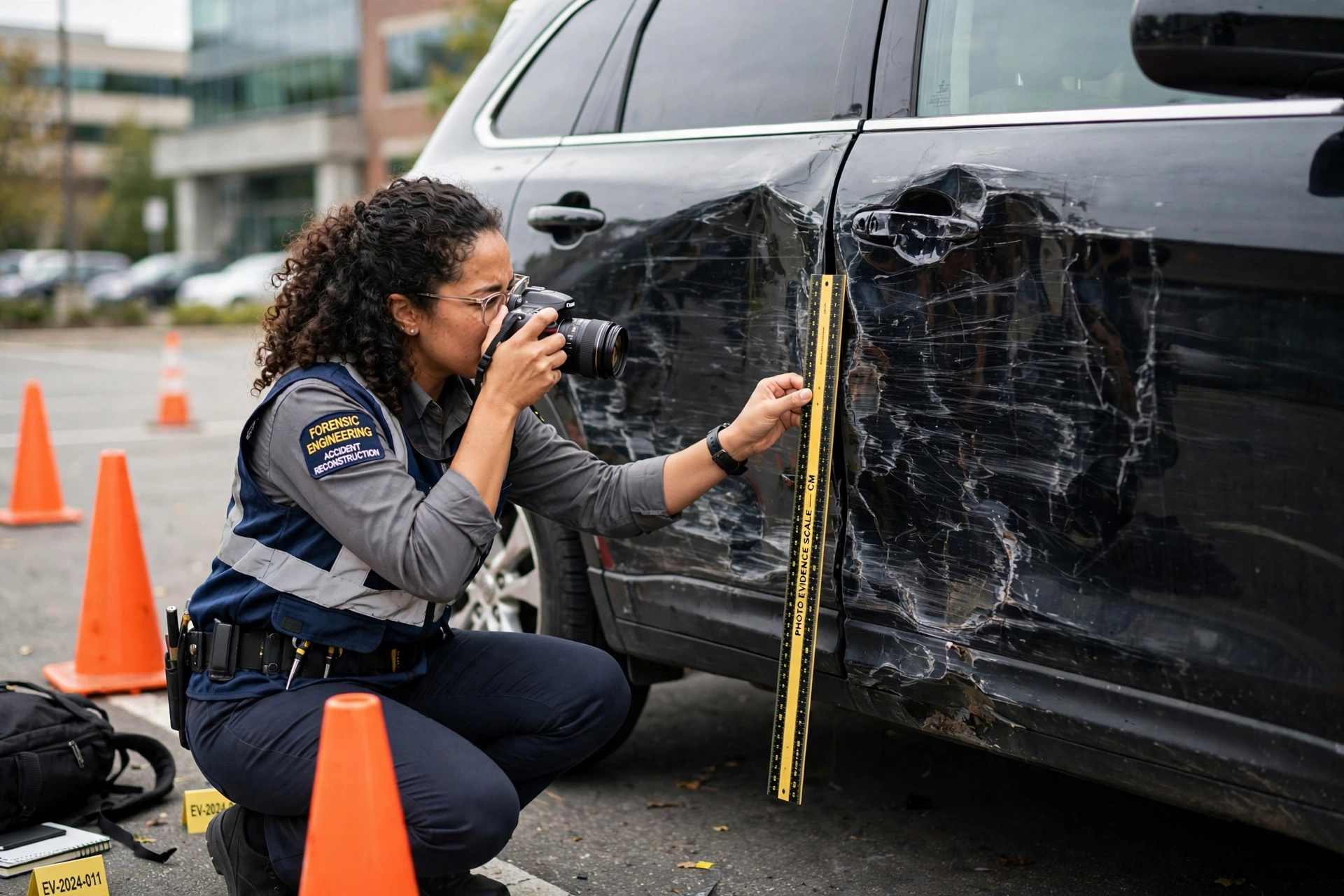
All instrumentation is meticulously calibrated, portable, and primed for instant data acquisition — in the lab or at the scene.
Bosch CDR tool, Hyundai & Kia EDR kits, and Tesla EDR kits — imaging the seconds that decide cases.
FARO Focus3D laser scanner for millimeter-precise scene and vehicle documentation.
RaceLogic VBoxSport performance meter for speed, distance, and acceleration testing.
Tri-axial accelerometers for in-vehicle and human-volunteer testing programs.
Datalogging sound and light meters for premises and equipment investigations.
Digital force gauges plus access to a university-grade Instron materials testing device.
BRi's research programs have encompassed human volunteers in low-speed rear-end and frontal impacts, as well as occupants exposed to emergency elevator stops — producing firsthand biomechanical data on events the literature barely covers.
This is the firm's structural advantage: when opposing counsel asks "what is your opinion based on," the answer can include measurements we took ourselves.

Our analyses draw on the authoritative datasets of the field — continuously updated, never taken on faith.
Thousands of vehicle-to-barrier and vehicle-to-vehicle crash tests from the National Highway Traffic Safety Administration.
Hundreds of instrumented crash tests from the Insurance Institute for Highway Safety.
Thousands of real-world vehicle impacts investigated and documented by the National Automotive Sampling System.
Thousands of research articles from the Society of Automotive Engineers and other authorities.
Testing, inspection, and analysis — scoped honestly, executed rigorously, documented for trial.