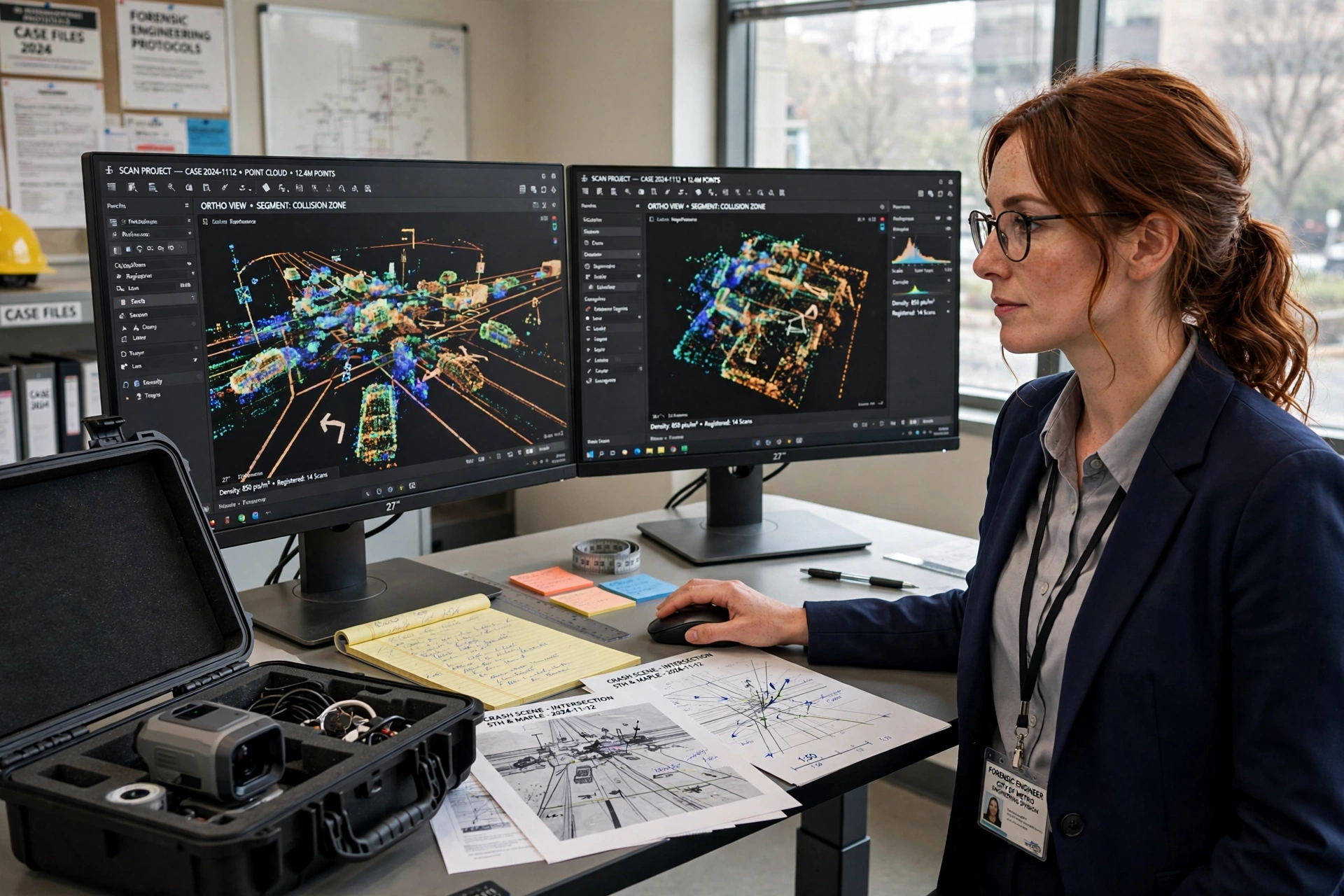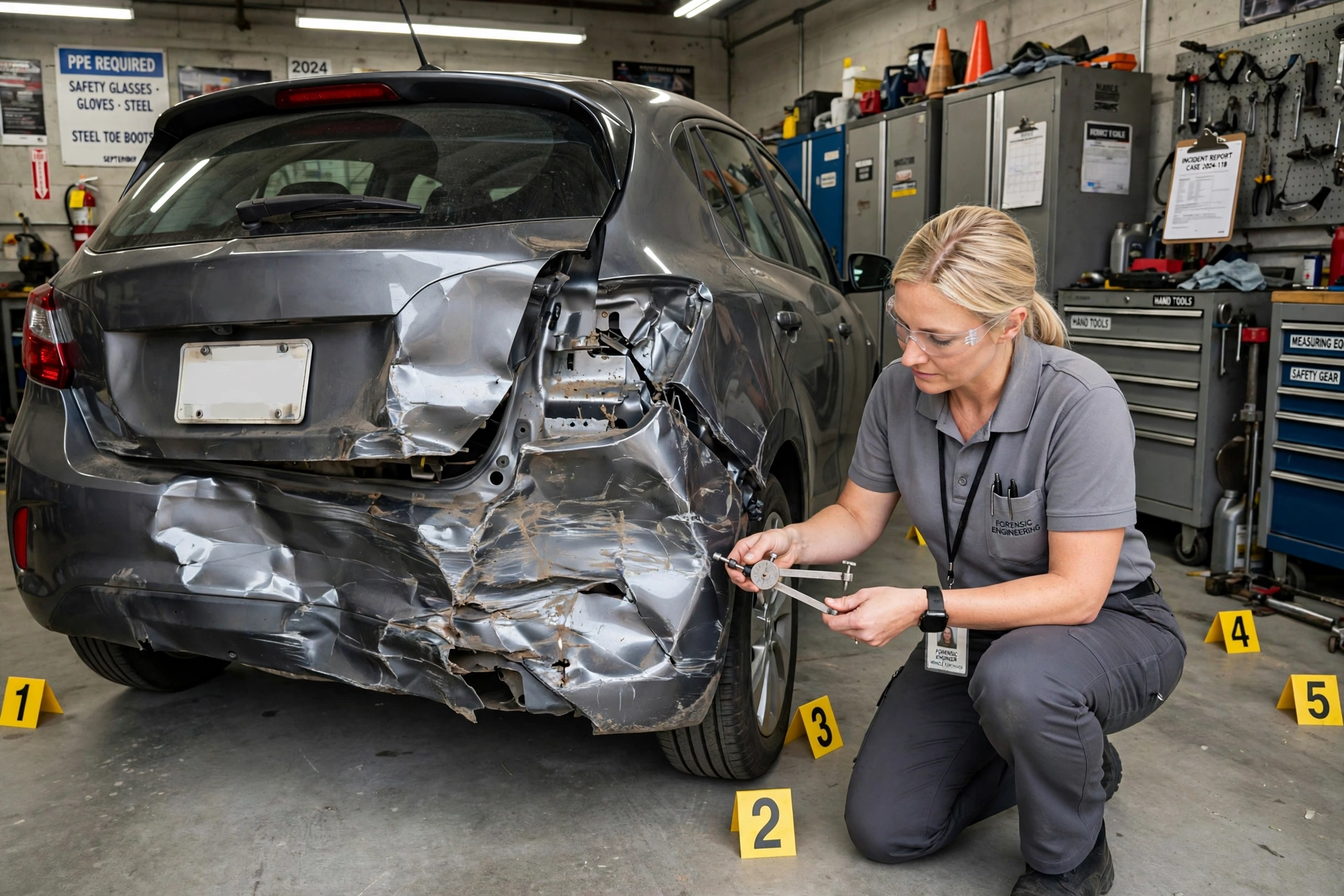
Forensic engineer documenting crash damage
Services

Multidisciplinary.
One standard of proof.

Each practice area is a deep discipline with its own methods, instruments, and literature — never a line item. Engagements routinely draw on several at once.
01

Accident Reconstruction

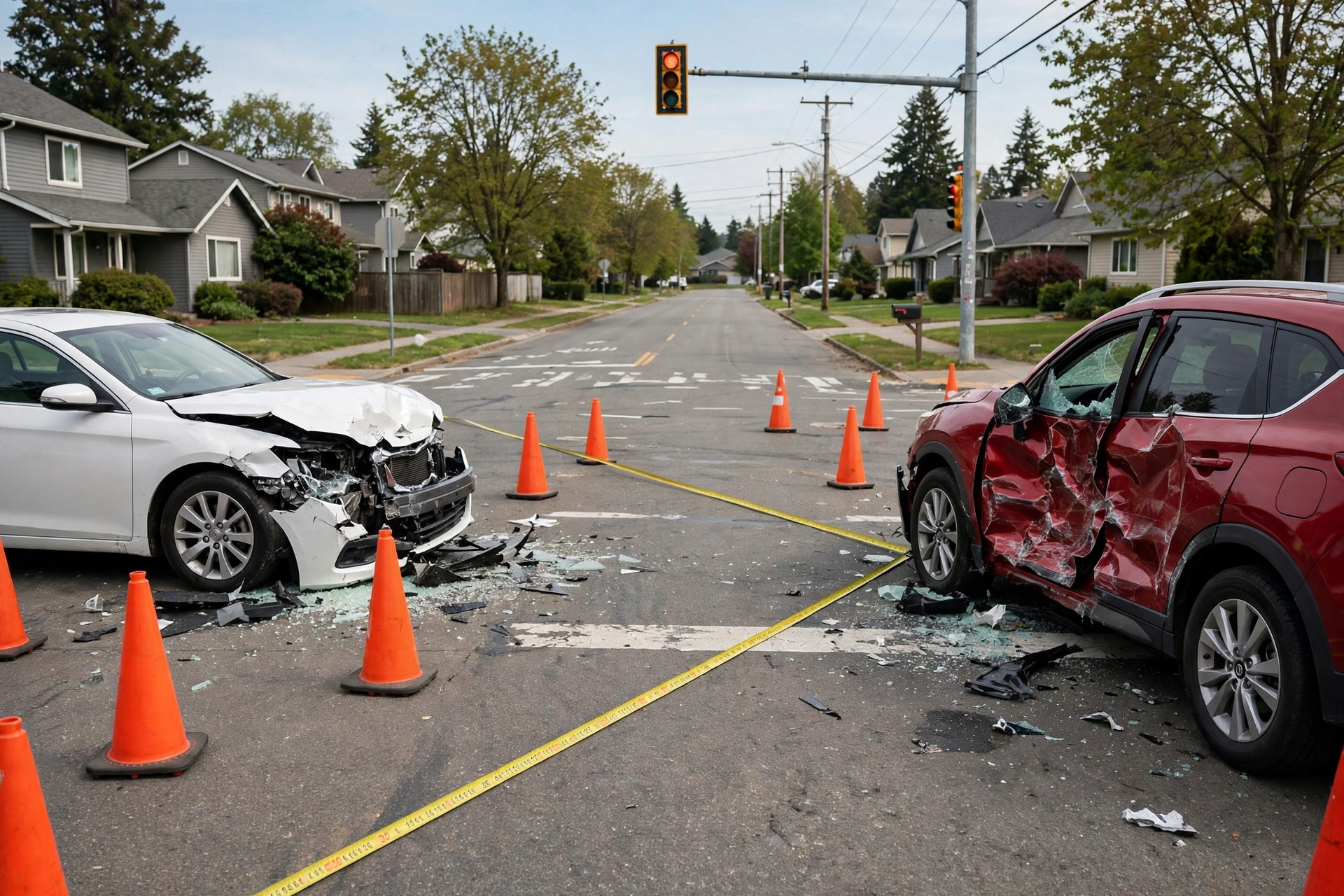
We determine how a collision happened — speeds, trajectories, sequence of events, and driver actions — from the physical evidence the crash left behind, not from anyone's recollection of it.

  • ✓
    Speed & trajectory analysis

    Conservation of momentum and energy methods, crush-based closing speeds, and yaw/skidmark analysis.

  • ✓
    Scene documentation

    FARO Focus3D laser scanning, photogrammetry, and scaled diagramming that preserve the scene to millimeter precision.

  • ✓
    Visibility & human factors

    Sight-distance studies, conspicuity analysis, and perception-reaction evaluation grounded in the research literature.

Collision scene with skid marks at dusk
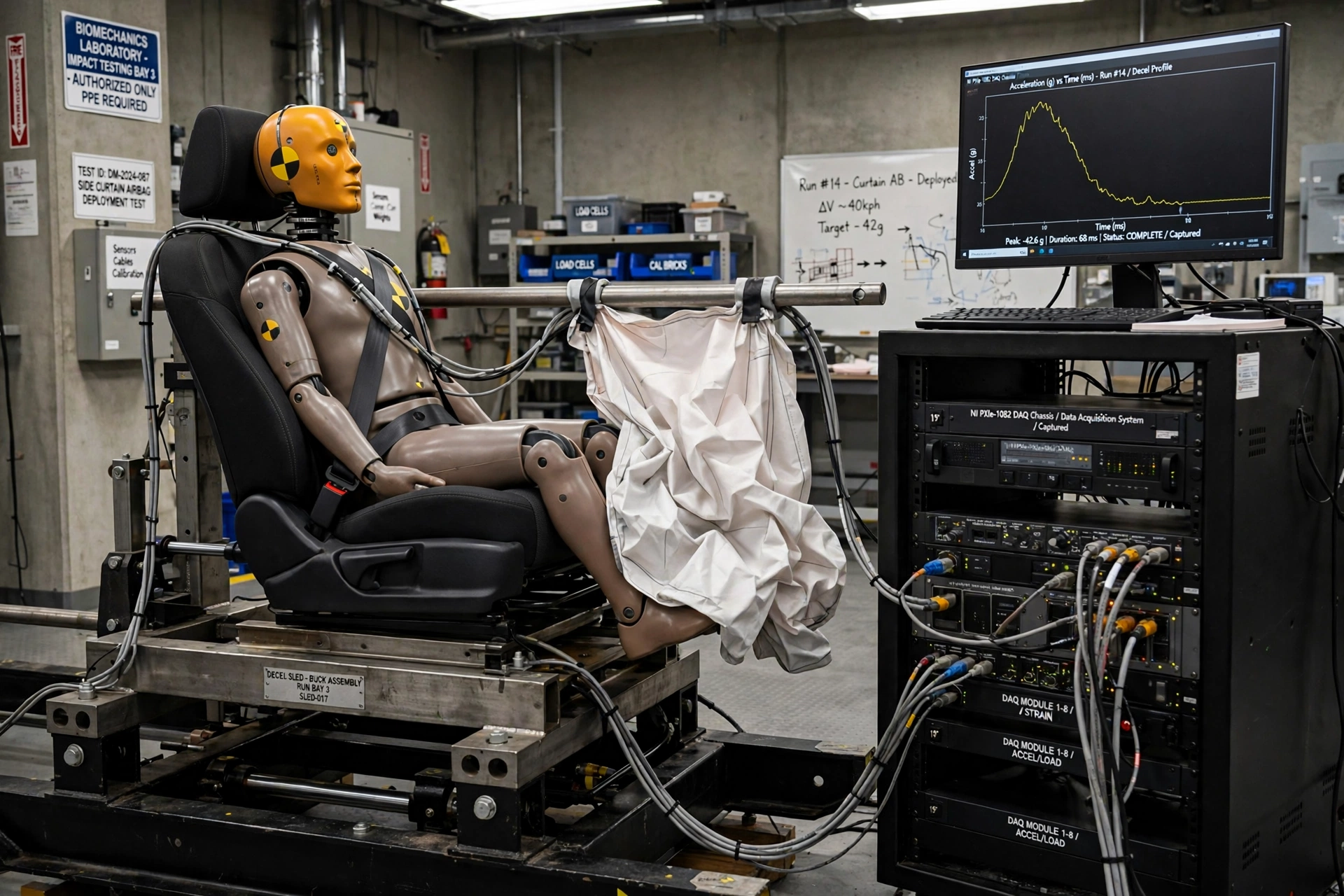
Instrumented crash test dummy in biomechanics lab
02

Biomechanical Engineering

The bridge between the crash and the injury. We analyze occupant kinematics, restraint interaction, and injury causation — determining whether the forces of a specific collision could produce a specific claimed injury.

  • ✓
    Injury causation & consistency analysis

    Comparing crash severity (delta-V, accelerations) against biomechanical tolerance data and the medical record.

  • ✓
    Occupant kinematics

    How bodies move inside the vehicle during impact — seatbelt loading, airbag interaction, head strike, ejection risk.

  • ✓
    Low-speed impact research

    BRi's own human-volunteer testing programs inform our analysis of the minor collisions other firms can only theorize about.

03

Mechanical Engineering

Component failures, product performance, and materials behavior — investigated with laboratory instrumentation and first-principles mechanics.

04

Research & Testing

The engine room of the firm. BRi conducts independent research and instrumented testing programs whose data feeds every opinion we render — because the most defensible analysis is the one built on measurements we took ourselves.

  • ✓
    Human-volunteer impact studies

    Low-speed rear-end and frontal impacts with instrumented volunteers — real occupant response data.

  • ✓
    Calibrated, portable instrumentation

    Tri-axial accelerometers, load cells, speed traps, and datalogging meters — meticulously calibrated and ready for field deployment.

  • ✓
    Data foundations

    Thousands of NHTSA and IIHS crash tests, NASS real-world investigations, and the SAE literature — continuously updated.

Engineering simulation workstation
05

Engineering Simulations

Complex dynamics, made legible. Our forensic animations and visualizations translate reconstruction mathematics into exhibits a jury absorbs in minutes — every frame traceable to the underlying analysis.

06

Crash Data Retrieval

Event data recorders capture the seconds that decide cases — but only if imaged properly and interpreted honestly. BRi maintains current EDR tooling across makes, including the platforms most firms cannot read.

  • ✓
    Bosch CDR imaging

    Industry-standard crash data retrieval with documented chain of custody.

  • ✓
    Hyundai/Kia & Tesla toolkits

    Manufacturer-specific EDR access for vehicles the generic tools miss.

  • ✓
    Interpretation, not just download

    Delta-V, pre-crash data, and system states analyzed in engineering context — with the limitations stated plainly.

Engagement

How a matter begins.

Send the essentials — parties, date of loss, what you need answered. A principal engineer eventually reviews every inquiry, with an honest assessment of whether we can help.

Submit a Case Inquiry

Not sure which discipline your case needs?

Describe the matter. We'll tell you plainly what analysis applies — and whether we're the right firm for it.